
Damp is one of the most common problems in UK homes, and if left untreated, it can cause structural issues, health risks, and costly repairs. Detecting damp early is essential, but not all moisture problems are visible on the surface. This is where damp meter readings come in.
At Surveying Cymru, our experienced chartered surveyors based in Monmouth use professional damp meters as part of our residential property surveys. These accurate readings give homeowners, landlords, and buyers peace of mind, helping them understand whether a property is affected by hidden moisture problems.
Call: 01600 715350 to enquire about a survey
What Are Damp Meter Readings?
How Damp Meters Work
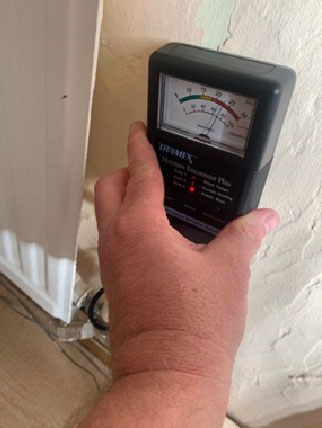
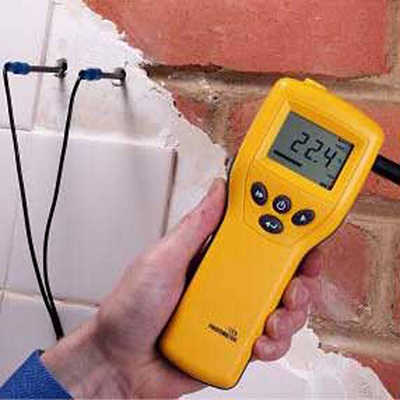
Damp meters measure the level of moisture within building materials such as walls, floors, and timbers, giving surveyors a clear picture of what is happening beneath the surface. They work by using electrical resistance through small pins inserted into the material, or by surface sensors that detect moisture without causing any damage.
The readings produced indicate whether materials are dry, within an acceptable safe range, or showing elevated levels that may point to damp problems. This makes damp meters an essential diagnostic tool, as they allow surveyors to distinguish between harmless background moisture and more serious issues such as rising damp, penetrating damp, or condensation.
By providing reliable, data-driven results, damp meters form the foundation for accurate property assessments and informed recommendations.
WHAT OUR CLIENTS SAY


Different Types of Damp Meters
Pin-Type Damp Meters
These meters use two or more sharp probes that are inserted into building materials such as plaster, timber, or masonry. By measuring the electrical resistance between the pins, the device can calculate the moisture content within the material itself. This method provides very accurate, point-specific results, making it particularly useful for identifying localised areas of damp. However, because it requires penetration into the surface, it is considered slightly invasive and may leave small pinholes, so it is often used selectively in areas where dampness is suspected.
Pinless (Non-Invasive) Damp Meters
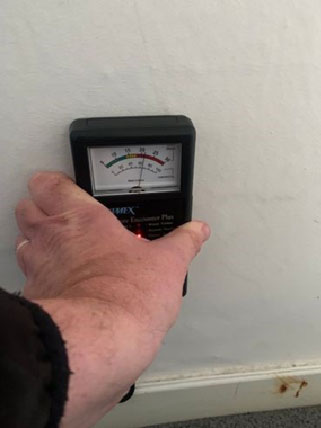
Instead of probes, these devices use flat sensors placed directly against the surface of a wall, floor, or ceiling. They work by emitting low-frequency signals or electromagnetic waves that penetrate beneath the surface to detect changes in moisture content. The key advantage of pinless meters is that they leave no marks or damage, making them ideal for finished surfaces or decorative areas where preserving appearance is important. They are quick to use over larger areas, allowing surveyors to scan multiple locations efficiently before deciding if further testing is needed.
Hygrometer Meters
A hygrometer does not measure the moisture content of materials directly but instead monitors the relative humidity and temperature of the air inside a property. High humidity levels can signal a risk of condensation forming on walls, windows, and other surfaces, which can contribute to mould growth and damp conditions. By comparing hygrometer results with other damp meter readings, surveyors can build a more complete picture of the environment within a building, identifying whether moisture problems are caused by external water ingress or internal atmospheric conditions.
Why They Are Important
Damp meter readings are vital for detecting issues such as rising damp, penetrating damp, or condensation before they develop into more serious problems.
These early signs are often hidden from view, and without specialist equipment, homeowners may not realise there is a problem until visible damage occurs. Rising damp can weaken plaster and cause paint to peel, penetrating damp may damage brickwork and timbers, while condensation often leads to mould growth that affects indoor air quality.
By identifying these issues at an early stage, damp meter readings give surveyors the evidence needed to recommend timely interventions, helping to protect the property’s structure, preserve its value, and safeguard the health and comfort of those living in it.
Benefits of Professional Damp Meter Readings
Reliable Results
Our surveyors interpret results in context, separating harmless surface readings from genuine damp problems.
Peace of Mind for Homebuyers
Buying a property is a major investment. Damp meter readings ensure you know exactly what you’re committing to.
Supporting Landlords and Homeowners
Regular damp checks protect tenants, prevent property damage, and help landlords comply with housing standards.
Insurance and Mortgage Requirements
Lenders and insurers often require professional surveys with damp data before approving applications.
The Role of Damp Meter Readings in Property Surveys
Identifying Hidden Damp
Moisture can build up behind plaster, under flooring, or within timbers without showing clear signs. Damp meters allow surveyors to uncover these problems quickly.
Evidence for Reports
Accurate readings provide data that chartered surveyors can include in homebuyer and condition surveys, offering reassurance to property owners, buyers, and mortgage lenders.
Preventing Long-Term Issues
By detecting dampness early, homeowners can take preventative action, protecting their property from structural decay, mould growth, and expensive remedial works.
FAQs About Damp Meter Readings
What is a normal damp meter reading?
Generally, a reading below 20% in building materials is considered safe. Higher readings may indicate damp issues.
Can I check damp myself with a DIY meter?
Yes, but professional surveyors provide more accurate results and can interpret readings correctly within the context of the property.
Do all property surveys include damp readings?
Yes. At Surveying Cymru, damp meter readings are a standard part of our homebuyer and condition surveys.
What happens if high moisture levels are detected?
If readings are high, further investigation is recommended. Solutions may include ventilation improvements, repairs, or damp-proofing measures.
Are damp meter readings required for mortgages?
Often, yes. Many lenders require surveys that confirm a property is free from significant damp issues.
Book Your Damp Meter Reading Today
Damp meter readings are one of the most effective ways to identify hidden moisture problems in residential properties. They provide accurate, evidence-based results that can protect your investment, reassure buyers and lenders, and prevent long-term property damage.
Call: 01600 715350 Email: nick@surveyingcymru.co.uk
Surveying Cymru – Trusted surveyors delivering expert solutions for homes.